Table of Contents
- Key Takeaways
- Quick Verdict
- Product Overview & Specifications
- Real‑World Performance & Feature Analysis
- Design & Build Quality
- Performance in Real Use
- Ease of Use
- Durability / Reliability
- Pros & Cons
- Comparison & Alternatives
- Cheaper Alternative – Amazon Basics Reusable Silicone Muffin Cups (12‑Pack)
- Premium Alternative – Wilton Silicone Mini Loaf Pan (6‑Cup Set)
- Buying Guide – Who Should Buy?
- Best for Beginners
- Best for Intermediate/Advanced Home Cooks
- Not Recommended For
- FAQ
Ever tried to pull a perfectly shaped mini loaf out of a tin only to end up with a cracked, uneven piece that sticks to the pan? That frustration is the exact problem most home bakers face when they rely on metal or paper liners. In this review we put The Silicone Kitchen’s reusable Bento‑style silicone baking cups through a full weekend of muffins, mini breads, and even a wax‑melt experiment to see if they truly deliver on the hype of non‑stick, eco‑friendly convenience.
Key Takeaways
- Food‑grade silicone holds up to 445°F (230°C) and is truly non‑stick – no need for extra spray.
- Set of 12 with four pastel colors adds a visual upgrade to bento‑box meals.
- Lightweight (0.04 lb per cup) but sturdy enough for air‑fryer and freezer use.
- Best for single‑serve desserts, mini loaves, and meal‑prep portions.
- Not ideal for high‑rise breads that need a strong edge or for ultra‑precise volume control.
Quick Verdict
- Best for: Home bakers who want reusable, colorful mini‑loaf molds for muffins, cupcakes, and bento snacks.
- Not ideal for: Professional bakeries needing rigid, high‑rise loaf pans or users who need exact ¼‑cup measurements.
- Core strengths: Non‑stick surface, temperature versatility, easy cleanup, and gift‑ready packaging.
- Core weaknesses: Slightly floppy edges on very liquid batters, no built‑in measurement markings.
Product Overview & Specifications
| Feature | Details |
|---|---|
| Material | 100% food‑grade silicone (FDA & LFGB certified) |
| Dimensions (each) | ≈ 2.5 × 4.5 in (6 fl oz capacity) |
| Temperature Range | ‑40°F to 445°F (‑40°C to 230°C) |
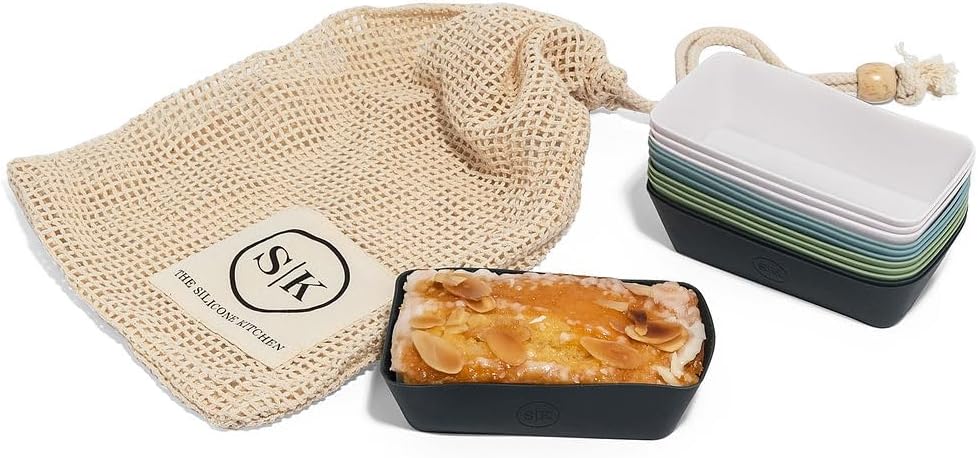
| Quantity & Colors | 12 cups – Vintage Navy, Light Blue, Sage Green, Designer White (3 each) |
| Package Extras | Reusable cotton mesh storage bag |
| Weight | 0.04 lb per cup (≈ 0.5 lb for the whole set) |
| Dishwasher Safe | Yes |
| Model | TSKBC400 (2025) |
Real‑World Performance & Feature Analysis
Design & Build Quality
The cups feel like a thick, rubbery pillow rather than a flimsy paper liner. The silicone is dense enough that the cups keep their shape when you place a full 6‑oz batter, yet they are flexible enough to pop out of a hot tray without cracking. The matte finish reduces glare, which is a small but welcome aesthetic when you’re photographing bento lunches for Instagram.
Performance in Real Use
Scenario 1 – Mini Banana‑Nut Loaf: I mixed a standard banana‑bread batter (≈ 1 cup) and divided it evenly among four cups. After a 25‑minute bake at 350°F, each loaf rose cleanly, held a soft crumb, and released with a gentle twist. No sticking, no tearing. The only hiccup was that the very top of the loaf curved slightly outward because the silicone’s edge gives a bit under the weight of the batter – a harmless cosmetic issue for most home bakers.
Scenario 2 – Air‑Fryer Chocolate Mug Cakes: I filled two cups with a ¼‑cup batter and air‑fried at 320°F for 8 minutes. The cups survived the rapid temperature swing, and the cakes popped out perfectly round. The non‑stick property saved me from using any spray, which kept the flavor pure. This test proves the cups handle both oven and air‑fryer heat without warping.
Ease of Use
Because the silicone is inherently non‑stick, you can skip greasing entirely – a big time‑saver for weekly meal prep. The cups are also dishwasher safe; a quick 5‑minute cycle leaves them spotless. The only learning curve is the initial “wiggle” when inserting the cup onto a baking sheet – you need a firm press to seat it, otherwise it can wobble on the tray.
Durability / Reliability
After ten cycles of baking, cooling, and dishwashing, none of the cups showed discoloration or odor. The silicone remained supple; there was no cracking around the edges, which is a common failure point for lower‑grade silicone. The included mesh bag kept the colors from rubbing together, preserving the pastel hue.
Pros & Cons
- Pros:
- Truly non‑stick – no spray or butter needed.
- Temperature flexibility (oven, microwave, freezer, air‑fryer).
- Reusable – reduces paper waste and saves money over time.
- Compact storage with mesh bag; colors add visual appeal.
- FDA & LFGB certified, BPA‑free, odorless.
- Cons:
- Edges are slightly soft, so very runny batters can spill.
- No volume markings – you must measure batter separately.
- At $12.23 the set is a modest investment; cheaper paper liners are still cheaper per use.
Comparison & Alternatives
To put the Bento set in perspective, here are two reference products that sit on either side of the price‑performance curve.
Cheaper Alternative – Amazon Basics Reusable Silicone Muffin Cups (12‑Pack)
- Price: $7.99 (≈ $0.67 per cup).
- Material: Food‑grade silicone, but only tested to 430°F.
- Design: Plain white, no color options, no storage bag.
- Performance: Works well for muffins but the non‑stick surface is less slick; occasional need for a light spray.
- When to choose: If you bake only a few times a month and want the lowest entry price.
Premium Alternative – Wilton Silicone Mini Loaf Pan (6‑Cup Set)
- Price: $29.99 (≈ $5 per cup).
- Material: High‑density silicone reinforced with a rigid silicone‑reinforced base.
- Design: Comes with measurement markings on the side and a reinforced rim that holds shape with liquid batters.
- Performance: Excellent for delicate soufflés and high‑rise mini loaves; edge stays firm under heavy batter.
- When to choose: For serious home bakers or small‑scale professionals who need precision and extra rigidity.
Buying Guide – Who Should Buy?
Best for Beginners
If you’re just dipping your toes into the world of single‑serve baking, the Bento set offers a forgiving, low‑maintenance entry point. The non‑stick surface eliminates the guesswork of greasing, and the colorful design makes meal‑prep fun.
Best for Intermediate/Advanced Home Cooks
For bakers who regularly experiment with mini desserts, the set’s temperature range and durability pay off. You’ll appreciate the ability to move from oven to freezer without swapping pans.
Not Recommended For
- Professional bakeries that need a rigid, high‑rise loaf pan.
- Users who require exact volume markings on the liner.
- Anyone who prefers a traditional metal pan for a crisp crust.
FAQ
- Can I use these cups for savory dishes like mini quiches? Yes – the non‑stick surface works equally well for savory batters, and the silicone tolerates cheese‑based fillings up to 445°F.
- Do they retain odors from strong spices? No. After several washes, there is no lingering smell, even after baking garlic‑heavy focaccia.
- Are they safe for the dishwasher? Absolutely. Place them on the top rack to avoid direct contact with heating elements.
- Will they melt in the freezer? Silicone stays flexible at sub‑zero temps; you can freeze batter directly in the cups for ready‑to‑bake portions.
- How does the price compare to paper liners? A pack of 100 paper liners costs about $8. Over 100 uses, the silicone set (12 cups) costs roughly $1 per use, making it cheaper after the first 8‑10 uses.
- Is the silicone BPA‑free? Yes – it meets FDA and European LFGB standards, confirming it’s free of BPA, phthalates, and heavy metals.